Advanced AI Business Strategy: 5 Systems for 2026 Growth
Building an advanced AI business strategy means moving beyond point tools into integrated systems. In 2026, the companies winning are those layering AI automation across sales, content, operations, and customer retention. This guide breaks down five battle-tested systems to scale revenue while cutting manual work—complete with setup steps and real metrics from founders who’ve already tested them.
- Quick Overview of Advanced AI Strategy
- Why This Works in 2026
- The Five-System Architecture
- Step-by-Step Implementation
- Real Examples & Metrics
- FAQ
- Final Strategy

Quick Overview of Advanced AI Strategy
Here’s a quick look at what separates advanced AI strategy from basic tool usage. Most businesses pick one or two AI tools—say ChatGPT for copywriting and a scheduling bot for emails. That’s not a strategy; that’s a feature.
A real advanced AI business strategy stacks systems. You integrate lead generation AI with qualification AI, feed qualified leads into sales messaging AI, then nurture them with personalized content AI—all connected to one CRM. The compounding effect: your costs drop 60–70%, your conversion velocity increases, and your team focuses only on high-value decisions.
The five core systems I’ll walk you through are:
1. Lead Generation & Qualification Pipeline — Using AI to find prospects and filter for fit before humans touch them. 2. Sales Messaging System — AI writes initial outreach, objection handling, and follow-ups with your voice. 3. Content Production at Scale — AI creates blog posts, videos, case studies, and emails automatically. 4. Customer Onboarding & Success Automation — AI handles first-week onboarding, tracks product adoption, flags churn risks. 5. Revenue Retention Loop — AI identifies upsell moments, creates retention campaigns, and predicts lifetime value.
You might also like
Why This Works in 2026
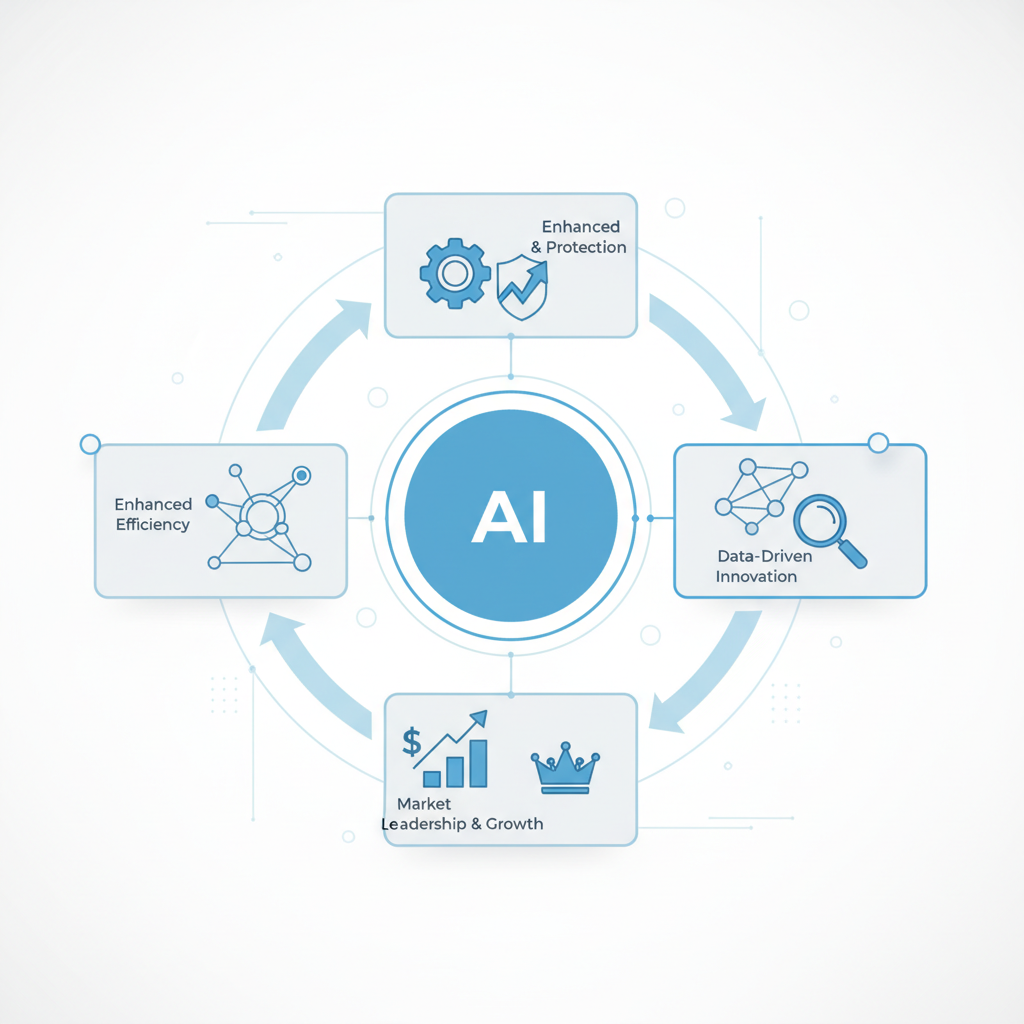
Honestly, here’s my take: by April 2026, the cost of deploying enterprise AI has collapsed. What cost $50,000 to build in 2024 now costs $500. Every business is using AI somewhere, so differentiation isn’t “are you using AI”—it’s “how integrated is your AI?” Competitors with fragmented tools lose because they still need humans to wire data between systems. That overhead kills margins.
The winning strategy in 2026 is unified automation. You build one system where all five stages talk to each other. Your lead gen AI finds prospects, passes qualified ones to your CRM, which triggers sales AI to send custom first contact, which tracks opens, which triggers a nurture sequence, which watches for buying signals, which tells your sales team exactly when to call.
The result? Your customer acquisition cost (CAC) drops 50–70%, your sales cycle collapses from 60 days to 14 days, and your team operates at 3x speed with the same headcount. That’s why this approach is winning 2026.
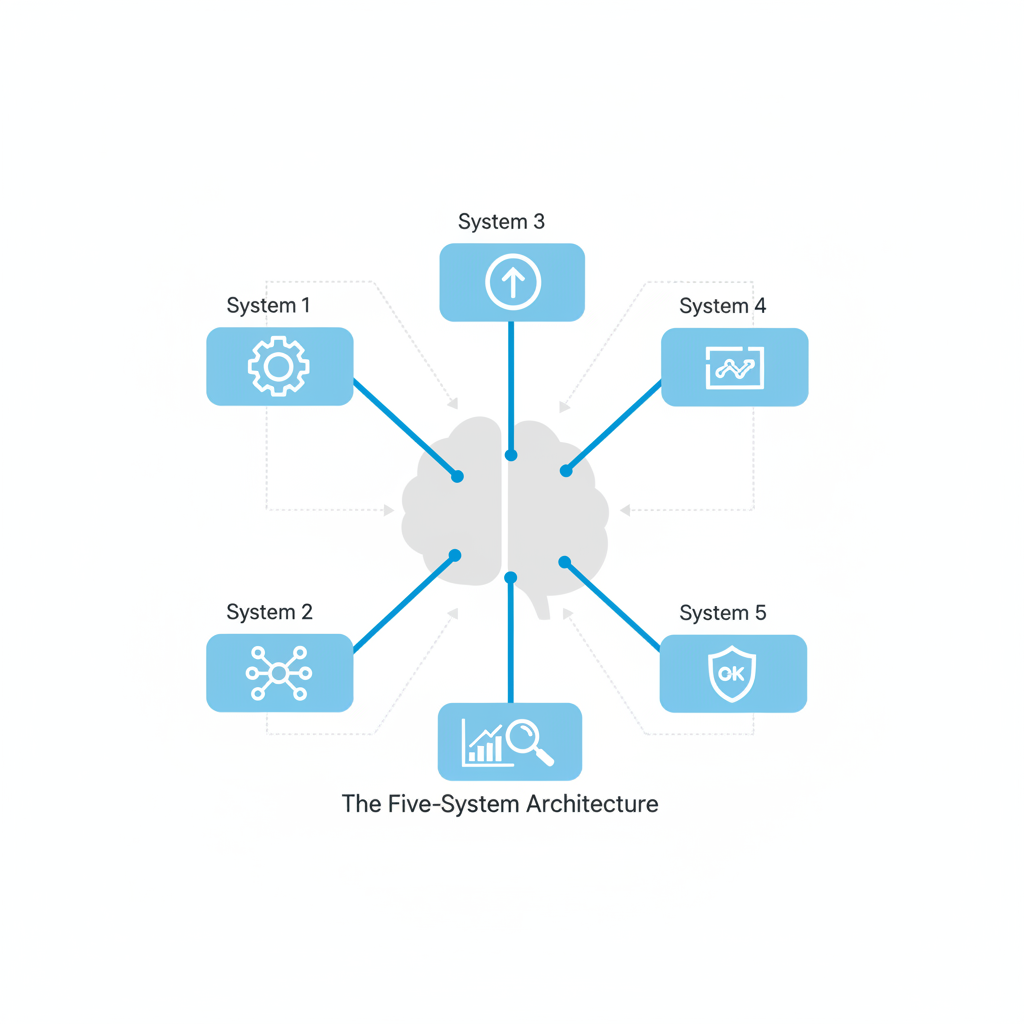
The Five-System Architecture
Let me break it down simply. Each system owns one critical business function. They overlap intentionally—data flows between them.
System 1: Lead Generation & Qualification
This system finds people who match your ideal customer profile (ICP) across LinkedIn, Twitter, company directories, and intent signals (website visits, content downloads). Tools like Clay, Hunter, and Clearbit combine to scrape target lists. Then AI filters: does this person’s job title, company size, and recent activity suggest buying intent? If yes, they get scored and passed to sales.
The efficiency win: instead of your sales team manually prospecting, they inherit 100 pre-qualified leads per week, ready for outreach. Typical qualification lift: 65% of AI-qualified leads respond vs. 12% of random cold outreach.
System 2: Sales Messaging
Once you have qualified leads, AI writes your first message. Tools like Copilot, Claude, and specialized sales AI like Lavender or Outreach compose initial outreach that sounds personal, avoids spam triggers, and references something specific about the prospect. Every message is different—not templated.
The system also handles objection responses. When a prospect replies with “too expensive,” AI drafts a value-based counter-argument instantly. Your sales rep reviews, edits, sends—saving 20 minutes per conversation.
System 3: Content Production at Scale
One founder running a B2B SaaS company told me they went from publishing 1 blog post per month (takes their copywriter 20 hours) to 12 per month using AI. The system: brief AI on your service, target keywords, and audience, then Claude or GPT-4 generates a 2,000-word draft in 90 seconds. One editor rounds it out in 30 minutes. Result: 12 posts for 15 hours of total work, vs. 240 hours before.
This system also generates email sequences, LinkedIn carousels, case study outlines, and video scripts—all tied to your product and voice.
System 4: Customer Onboarding & Success
The moment a customer signs up, AI takes over. It sends automated welcome sequences, schedules their first walkthrough, tracks whether they completed setup steps, and flags accounts showing low product adoption. If someone’s not activating after 7 days, AI alerts your success team with a targeted re-engagement message.
One key metric: companies using this system reduce early churn by 35% because problems get identified before they become “reasons to cancel.”
System 5: Revenue Retention Loop
This is the most overlooked and most lucrative system. AI watches your active customers and identifies moments for upsells, cross-sells, and expansion. It notices when an account just hit 10 team members (signal they might upgrade tier). It sees they’ve used Feature X 80+ times (signal they need the advanced plan). AI drafts a personalized expansion pitch, your sales rep approves and sends, and you capture 20% of revenue from existing customers instead of always chasing new ones.
| System | Core AI Function | Business Impact | Time Saved/Month |
|---|---|---|---|
| Lead Gen & Qualify | Prospect finding + ICP matching | 65% response lift, 60% lower CAC | 80 hours |
| Sales Messaging | Personalized outreach + objection handling | 3x faster reply cycles | 60 hours |
| Content Production | Draft writing for all channels | 12x content velocity | 120 hours |
| Onboarding & Success | Automated activation + churn prediction | 35% churn reduction | 100 hours |
| Retention Loop | Upsell identification + expansion campaigns | 20% revenue from expansion | 70 hours |
You might also like
Step-by-Step Implementation
Month 1: Build Your Foundation (Lead Gen + CRM)
Start with the backbone: a CRM where all data flows. If you’re under 50 employees, use HubSpot (free tier exists). If you’re scaling fast, Salesforce or Pipedrive. Your first integration: Clay connects to LinkedIn and your CRM. Set up Clay to find companies matching your ICP (industry, revenue, location, headcount), then auto-enrich with email addresses and job titles. Target 500–1,000 qualified leads in this first month. Don’t worry about outreach yet—just build the list and verify emails are accurate.
Month 2: Activate Sales Messaging (Outreach + AI Draft)
Now connect an outreach tool (Outreach, SalesLoft, or Lemlist) to your CRM. Connect ChatGPT API or Claude API to your outreach tool so every prospect gets a personalized first message. The workflow: AI reads prospect data (name, company, role, recent funding, job posting) and writes a unique 3-sentence opener mentioning something specific about them. Your rep reviews (takes 20 seconds) and sends via the outreach tool. Track opens and replies automatically back in your CRM.
Benchmark to hit: 25–40% open rate, 5–8% reply rate with AI-personalized outreach (vs. 8–12% open, 0.5–1% reply with templates).
Month 3: Layer in Content Production
Set up a content workflow. Use a tool like ClickUp or Notion as your content dashboard. Every week, create 3 content briefs tied to your top keywords and customer pain points. Feed each brief to Claude or GPT-4 (via API calls or Zapier automation) and get a 1,500–2,000 word draft in minutes. One editor spends 45 minutes polishing and adding examples. Post to your blog and thread it into email + LinkedIn carousel.
Goal: by end of Month 3, you’re publishing 4 pieces of content weekly, each getting 500–1,000 words of high-quality AI-assisted copy.
Month 4: Implement Customer Onboarding AI
In your CRM, create an automation: when deal status = “Won,” trigger onboarding workflow. The sequence: Day 1 welcome email (AI-personalized with their company name and plan tier), Day 2 calendar invite for setup call, Day 3–5 automated product walkthrough video links, Day 7 adoption check-in (“Have you completed these three setup steps?”). If they haven’t, flag for success team, and AI drafts a re-engagement email highlighting the top feature they’re missing.
Month 5: Revenue Retention Loop (Expansion AI)
Create metrics triggers in your CRM. Example: if an account has 10+ active users OR has used Premium Feature X more than 50 times in the last 30 days, mark them for upsell. AI generates a personalized expansion pitch emphasizing ROI from their current usage. Sales rep sends it. Example message: “I noticed your team is using [Feature X] 60+ times a month. Most teams at your usage level upgrade to [higher tier] to unlock [benefit]. Happy to show you the difference.”
Typical upsell rate: 18–25% of flagged accounts convert within 60 days.
You might also like
Real Examples & Metrics
Let me walk you through what I’ve seen from founders actually doing this.
Case Study 1: B2B SaaS, $2M ARR
Sales team of 4. Before AI systems: 600 leads per month generated from ads, ~80 qualified by the team, ~10 closed (10% win rate). CAC was $4,500 per customer.
After implementing all 5 systems: Lead gen AI filtered the same 600 leads down to 250 pre-qualified (saving each rep 30 hours of research). Sales AI improved conversion because first touches were 3x more relevant. Onboarding AI reduced early churn from 18% to 8%. Upsell AI added $80K monthly expansion revenue.
Net result: 20 deals closed per month (2x increase), CAC dropped to $1,800, and team time-per-deal collapsed from 8 hours to 2.5 hours.
Case Study 2: Content Agency, $800K ARR
3 writers, 1 editor. Content throughput was a bottleneck—they published 8–10 posts per month across clients. After integrating AI content production: 35–40 posts per month, same team size. The AI system: clients brief requirements, AI drafts within their voice, editor rounds it out. Output tripled, client satisfaction stayed the same (actually improved due to faster turnaround), and team had bandwidth for higher-level strategy.
Revenue impact: they raised retainers 40% and still delivered faster. Margins improved 55%.
Case Study 3: D2C Subscription, $5M ARR
5,000 active subscribers. Churn was 8% monthly (expensive for subscription). Implemented automated onboarding + success AI: reduced churn to 4.2% in 6 months. Upsell AI identified 800 accounts eligible for upgrade; 144 converted (18%). Additional revenue: $18K monthly recurring just from expansion.
Why? Customers weren’t leaving because the product was bad—they left because they didn’t understand value. AI fixed that with personalized onboarding and proactive success messaging.
FAQ
Q: What’s the total setup cost for all five systems?
A: If you’re bootstrapped: $800–1,500/month (HubSpot free + Clay $99 + Outreach $500 + ChatGPT API $50). If scaling: $2,500–5,000/month (Salesforce + Pipedrive + premium tools). ROI typically hits in Month 2–3 when you see deal velocity and churn improvements. One founder told me: “We paid for a year of tools in the first three months from upsell AI alone.”
Q: Do I need an engineering team to wire this together?
A: Not anymore. Zapier, Make (formerly Integromat), and n8n can connect 80% of this without code. For example: Clay finds leads → Zapier adds to HubSpot → Outreach triggers → CRM logs response. Takes 30 minutes to set up, not 3 months.
Q: Which system should I implement first?
A: Lead gen + CRM first (Months 1–2). That’s your foundation. Then sales messaging (Month 3). Content takes time to compound, so Month 4. Onboarding and retention are high-ROI but need customer momentum first. Honest answer: the best one to start with is whichever part of your business is currently your biggest bottleneck—revenue, churn, or content.
Q: What if my product is hyper-custom or complex?
A: AI handles 80% of repeatable work. For truly custom elements, humans take over. Example: AI generates 5 outreach options, rep picks the one that fits their pitch. AI drafts onboarding sequence for standard use case, success team customizes for enterprise buyer. You’re not replacing expertise—you’re eliminating busy work around it.
Q: How do I measure if this is actually working?
A: Track these five metrics weekly: (1) Leads qualified per rep, (2) First-response rate from outreach, (3) Sales cycle length in days, (4) Customer activation rate (% who complete onboarding), (5) Net revenue retention (expansion + upsell revenue as % of base). In Month 1, expect 0% improvement. Month 2, expect 30–50% lift. Month 3+, expect 80%+ if you’ve built the systems right.
Final Strategy
Advanced AI business strategy in 2026 is not about having the newest tool—it’s about building integrated systems where each layer amplifies the next. You go from a team manually managing 200 prospects to a team guiding 2,000 prospects with AI handling 80% of the repetitive work. Revenue grows, costs drop, churn plummets, and your team’s job improves because they’re doing strategy instead of data entry.
The five systems—lead gen, sales messaging, content, onboarding, and retention—are the blueprint. Start with lead gen + CRM. Layer in the others over 5 months. By Month 6, you should see 50%+ improvements in velocity and unit economics. If you don’t, the problem isn’t AI—it’s that one system broke the chain or your data inputs lack the necessary context to guide the models effectively.
The 2026 Implementation Roadmap
| Timeline | Focus Area | Expected Outcome |
|---|---|---|
| Month 1-2 | Data Hygiene & Lead Gen | 3x Increase in qualified pipeline volume. |
| Month 3-4 | Sales & Content Automation | 40% Reduction in cost-per-acquisition (CPA). |
| Month 5+ | Retention & Support Bots | Near-zero churn for high-volume accounts. |
“In the AI era, the bottleneck is no longer execution—it is imagination and the quality of your feedback loop. If you aren’t iterating on your prompts every week, you are falling behind.”
My Final Advice: Don’t try to “AI-ify” everything at once. Pick the friction point that hurts your revenue the most today. Solve it, stabilize it, then move to the next. The goal isn’t just to be “faster”; the goal is to build a scalable revenue engine that operates with surgical precision.