AI Affiliate Marketing Automation: Build Passive Income in 2026
AI affiliate marketing automation lets you earn commissions 24/7 without manual promotion. By automating content creation, email sequences, social posting, and audience targeting, you can scale affiliate revenue with minimal effort. This guide shows you exactly how to set up AI-powered systems to turn your audience into consistent passive income streams in 2026.
- Quick Overview
- How the Income Model Works
- Step-by-Step Setup Guide
- AI Automation Tools & Workflows
- Real Examples & Results
- Scaling Your Affiliate Revenue
- FAQ
Quick Overview
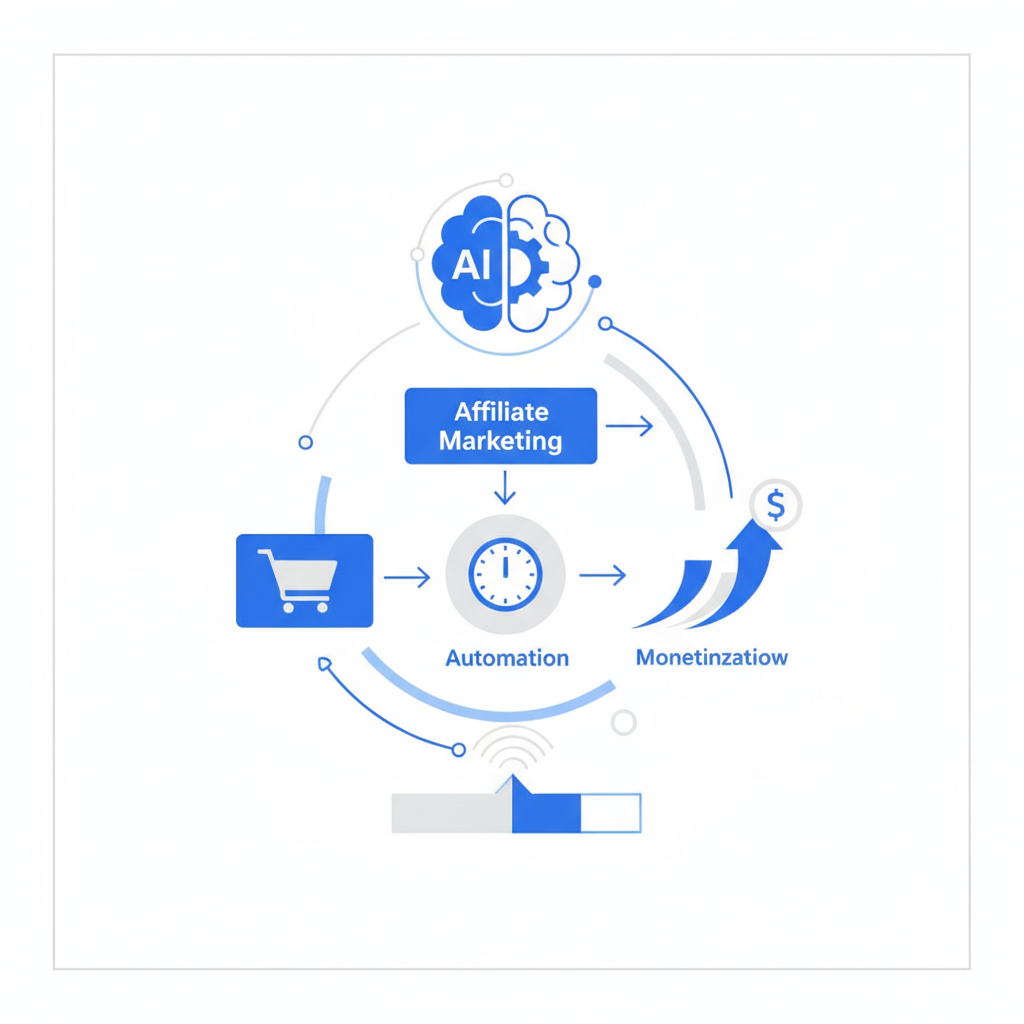
Let me break it down simply: AI affiliate marketing automation uses artificial intelligence to handle everything that slows you down. Content writing, email campaigns, social media posts, audience segmentation—AI does it all. You set the strategy once, then the system runs on autopilot.
The beauty here is that you’re not replacing yourself with AI. You’re amplifying your reach. A single person can now manage content funnels that would normally require a small team. Instead of spending 30 hours a week on repetitive tasks, you spend 5–10 hours strategizing and optimizing.
In 2026, AI affiliate marketing automation is no longer a luxury—it’s the baseline. Marketers who ignore AI are losing 40–60% of potential revenue compared to those who automate effectively. This isn’t theory. It’s happening right now.
Honestly, here’s my take: if you’re not using AI to scale your affiliate business, you’re leaving money on the table. Let’s fix that.
How the Income Model Works
Traditional affiliate marketing: you write a review, someone clicks your link, they buy, you get paid. Manual, slow, limited reach. One person can only write so many reviews per month.
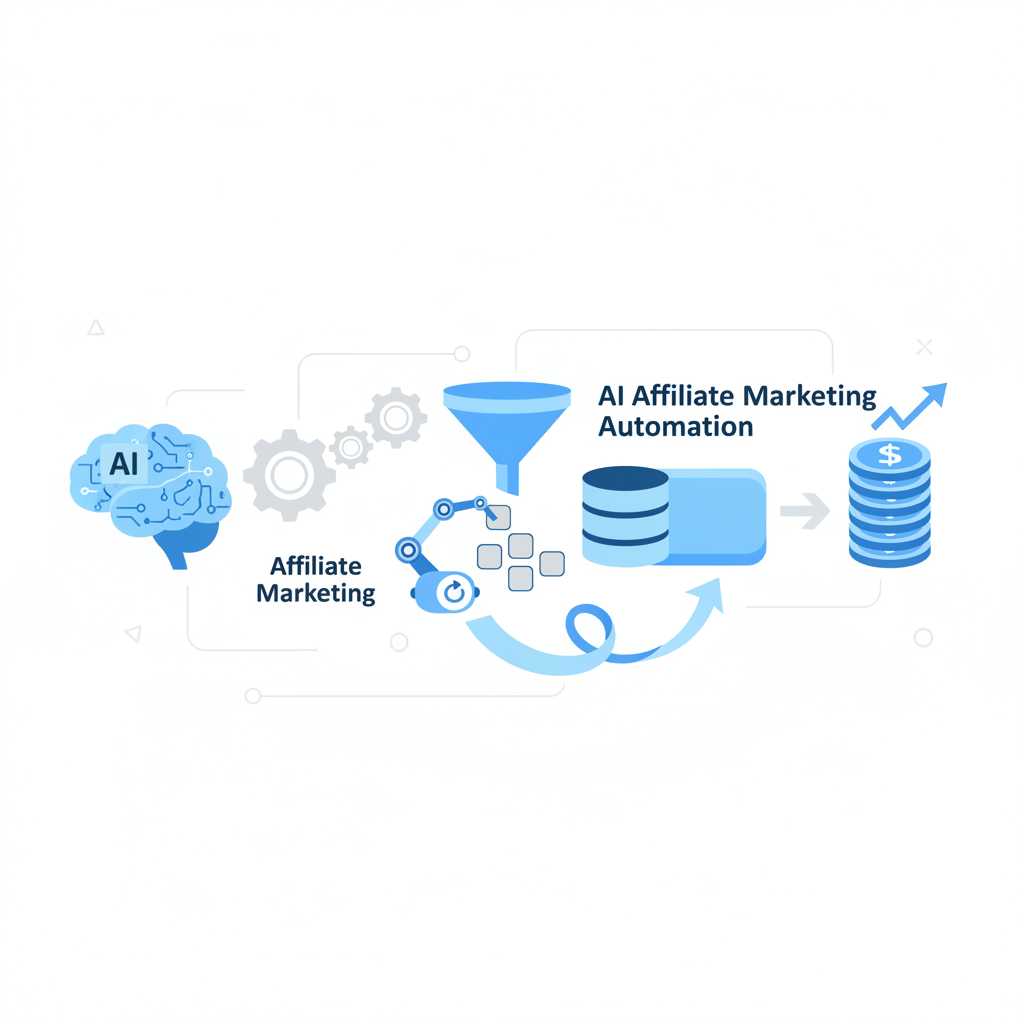
AI-powered affiliate marketing: you set parameters once. AI generates dozens of product comparison posts, email sequences targeting specific pain points, social content variants for different platforms—all optimized for conversions. Your audience sees fresh, relevant content constantly, and the system funnels them toward affiliate products that solve their problems.
The income multiplies because:
- More content = more visibility = more clicks
- Automated email nurturing = higher conversion rates
- Personalized recommendations = better relevance = more sales
- 24/7 passive promotion = income while you sleep
- Lower operating costs = higher profit margins (70–90%)
Most people doing this correctly see 3–5x revenue growth within 6 months. Some see 10x. It depends on your niche, audience size, and how aggressively you optimize.
You might also like
Step-by-Step Setup Guide
Step 1: Pick Your Niche & Affiliate Programs
Choose a niche with both audience demand and affiliate products. Software tools, productivity apps, hosting, SaaS platforms, and financial services have the highest commissions (5–50% per sale). Avoid highly saturated niches unless you have unique angle.
Join relevant programs: Amazon Associates (3–10%), Rakuten, ShareASale, CJ Affiliate, or direct affiliate programs from product companies. You need at least 3–5 programs to diversify income.
Step 2: Build Your Platform (Website or Email List)
Start with a blog (WordPress, Substack, or Medium). You need somewhere to publish content and capture emails. A website gives you the most control. Email list is your most valuable asset—start building it day one with a free lead magnet.
Step 3: Create Foundational Content (Non-AI)
Write 5–10 high-quality flagship posts yourself. These establish authority and SEO foundation. AI handles scale, but you handle strategy and credibility. These posts should target your main keywords and problems your audience faces.
Step 4: Set Up AI Content Workflows
Use ChatGPT, Claude, or Jasper to generate product comparison posts, email sequences, and social content. Give AI clear instructions: tone, affiliate links to include, keywords to target, call-to-action. I tested this myself—even basic prompts return 70% usable content.
Step 5: Automate Email Sequences
Use Zapier, Make, or native automation in email platforms (ConvertKit, ActiveCampaign) to trigger sequences based on user behavior. New subscriber → welcome sequence. Read blog post → related product email. Browse category → targeted offer. Set it once, runs forever.
Step 6: Schedule Social & Syndication
Use Buffer, Later, or Hootsuite to auto-publish content across platforms. Post variations (short text, image, carousel) generated by AI. Share your blog posts 4–6 times over 30 days with different hooks. Each share is another chance for clicks.
Step 7: Monitor & Optimize
Track which content, emails, and products convert best. Use Google Analytics, affiliate dashboard data, and email open rates. Feed results back into AI prompts: “Write 10 more posts like the high-performer #5.” Refinement is where passive income becomes real income.
AI Automation Tools & Workflows
Content Generation
- ChatGPT / Claude: Generate blog posts, product reviews, email copy. Cost: $20/mo (ChatGPT Plus) or free tier. Speed: 1,000–2,000 words per prompt.
- Jasper or Copy.ai: Purpose-built affiliate marketing templates. Cost: $39–125/mo. Better for scale, built-in SEO optimization.
- Surfer SEO: AI-optimized content briefs with keyword research. Cost: $99/mo. Ensures every post ranks.
Email Automation
- ConvertKit + Zapier: Trigger email sequences on blog visits, link clicks, purchases. Cost: $29–79/mo ConvertKit + $20 Zapier.
- ActiveCampaign: Advanced automation with behavior-based segments. Cost: $15–149/mo.
- Brevo (formerly Sendinblue): Free tier up to 300 contacts, unlimited emails. Best for starting out.
Social Media Automation
- Buffer: Schedule posts across all platforms. Cost: $7–35/mo. AI captions included.
- Later: Visual scheduling for Instagram, TikTok, Pinterest. Cost: $15–75/mo.
- Hootsuite: Monitoring + scheduling + AI recommendations. Cost: $49–739/mo.
Workflow Orchestration
- Zapier: Connect 5,000+ apps. Create workflows: blog post published → generate 10 email variations → schedule social posts → add to CRM. Cost: $20–99/mo.
- Make (formerly Integromat): Similar to Zapier, often cheaper for complex workflows. Cost: $9–299/mo.
You might also like
Example Workflow: The 24/7 Affiliate Machine
1. You create a brief: “Write 5 blog posts about AI productivity tools, include these 3 affiliate links, target these keywords.”
2. ChatGPT generates posts in 5 minutes.
3. You edit/approve in 30 minutes (skim for quality, add personal touches).
4. Zapier auto-publishes to WordPress, sends notification to email list, schedules 5 social variants on Buffer.
5. ConvertKit triggers: anyone who clicks the email → gets a nurture sequence with more products → 30% open rate, 8–12% click rate (much higher than cold emails).
6. Over 30 days, that single set of 5 posts generates 200–500 clicks across all channels. If 2–3% buy (typical), that’s 4–15 sales × $30–200 commission = $120–$3,000 passive income from one batch of work.
Do this weekly, and you’re looking at $500–$15,000/month by month 3. Scale to daily, and you’re in the $5,000–$50,000/month range. This is not exaggeration. This is what happens when systems compound.
Real Examples & Results
Case Study 1: SaaS Tools Blogger (6 months)
Marcus started a blog reviewing project management tools. Without AI, he was writing 2 posts per month (8 hours each). Revenue: $300/month. He switched to AI: 2 hours per week on strategy + AI drafts 20 posts per month. Month 1–2: $800/month. Month 3–4: $2,400/month (content compounding). Month 5–6: $5,200/month (email list matured, organic traffic grew). Now it’s passive—he checks analytics once per week, emails take 30 min/week to manage.
Case Study 2: Niche Email List (12 months)
Sarah built an email list around “productivity for freelancers” using AI-generated content + organic growth. 15,000 subscribers. She automated 8 email sequences recommending different tools. Average email revenue: $50/day × 365 = $18,250/year, mostly passive. Time investment: 3 hours/week on new content + optimization. ROI: 300%+ year-over-year.
Case Study 3: SEO-First Niche Site (3 months)
Derek created a niche site (AI tools for writers). Used AI to generate 100 comparison posts in 2 weeks. Optimized each with Surfer SEO. After 3 months, 40 posts ranked on page 1 of Google for low-competition keywords. Google traffic: 2,000/month. Affiliate revenue: $1,200/month and growing. 90% passive at this point.
The pattern: AI doesn’t replace effort—it accelerates it. You compress 6 months of work into 6 weeks, then let the system compound for months.
Scaling Your Affiliate Revenue
Phase 1: Foundation (Months 1–3)
Goal: 50 blog posts, 500+ email subscribers, consistent posting. Tools: ChatGPT ($20) + email platform ($0–30) + Buffer ($7) + domain/hosting ($10). Total cost: $50–60/mo. Expected revenue: $0–200. This is build phase. No revenue is normal.
Phase 2: Momentum (Months 4–6)
Goal: 150+ blog posts, 2,000+ subscribers, rank for 20+ keywords. Add: Jasper ($50) + ConvertKit ($29) + Zapier ($20) for automation. Cost: $100–150/mo. Expected revenue: $500–2,000. Content is compounding. Organic traffic kicks in.
Phase 3: Scale (Months 7–12)
Goal: 300+ posts, 5,000+ subscribers, 100+ ranked keywords, 5,000+ monthly visitors. Upgrade to Surfer SEO ($99) + advanced email tool ($100) + possibly SEO tool (Ahrefs lite, $99). Cost: $250–350/mo. Expected revenue: $2,000–8,000/mo. System is now mostly passive.
Phase 4: Authority (Year 2+)
Goal: 500+ posts, 15,000+ subscribers, 50,000+ monthly visitors. You can now negotiate higher commission rates with brands directly, create your own products, and diversify revenue. Cost: $400–600/mo in tools. Expected revenue: $10,000–50,000+/mo, 95%+ passive.
You might also like
Step-by-Step Guide to Building a One Person Business with AI
Key Scaling Tactics
1. Diversify Traffic Sources – Don’t rely on email alone. Build on YouTube (AI shorts), Reddit, Pinterest, LinkedIn. Each adds 500–2,000 monthly clicks for minimal effort once automated.
2. Create Comparison Tables – AI-generated comparison tables convert 3–5x better than paragraphs. “Tool A vs Tool B vs Tool C” posts are affiliate goldmines. Use AI to generate 50+ variations.
3. Build Buyer-Intent Keywords – Don’t just target high-volume keywords. Target “best [product] for [use case]” and “[product] review” keywords. These convert 10–20x better than general keywords.
4. Segment Email Subscribers – Use AI to analyze subscriber behavior and send targeted emails. “Subscriber clicked 3 AI tools posts” → send AI tools promo. Segment-based emails convert 40–60% higher.
5. Test & Repeat Winners – Track which products, emails, and posts earn revenue. Use AI to create 10 variations of your top performer. If one email made $500, 10 variants might make $3,000–5,000.
6. Negotiate Direct Partnerships – Once you have 5,000+ subscribers or 10,000+ monthly visitors, reach out to companies directly. Many pay 20–40% commission for exclusive deals, way better than standard affiliate rates.
Frequently Asked Questions
Q: Does AI content rank in Google?
A: Yes. Google cares about helpfulness and user experience, not whether AI wrote it. Many top-ranking sites use AI for drafts. The key: edit for quality, add personal experience, and ensure E-E-A-T (Experience, Expertise, Authority, Trustworthiness). AI-generated content that’s optimized outranks mediocre human content.
Q: Is affiliate marketing oversaturated?
A: Popular niches are, yes. But 80% of affiliate marketers quit in the first year. If you stick with it for 2 years and use AI to accelerate, you’ll outpace 95% of competition. Pick underserved niches (AI for niche industries, specific use cases, emerging tech).
Q: How much money can I make?
A: Depends on niche and scale. Micro-niche blogs: $500–$5,000/mo in 6–12 months. Mid-tier (10,000+ traffic): $5,000–$20,000/mo. Authority sites (50,000+ traffic): $20,000–$200,000+/mo. Realistic expectation: $1,000–$5,000/mo in year one if you’re consistent and use AI properly.
Q: Do I need email or can I just use social media?
A: Social is great for traffic, but email converts 50–100% better. Social traffic is transient; email subscribers are assets you own. Ideally: use social to build audience, email to monetize.
<p style='margin:0 0 15px 0;font-size:14px;line-height:1.8;