AI Business Optimization: Complete Strategy Guide for 2026
AI business optimization is no longer optional—it’s how competitive companies operate. By automating repetitive tasks, analyzing data patterns, and personalizing customer experiences at scale, businesses cut operational costs by 30–50% while improving output quality. This guide walks you through the exact strategies, tools, and implementation steps to optimize every part of your business using AI in 2026.
- Quick Overview
- Why AI Business Optimization Works in 2026
- Core Optimization Strategies
- Tools & Implementation Framework
- Real-World Optimization Examples
- Measuring Optimization ROI
- FAQ
Quick Overview: What AI Business Optimization Means
Let me break it down simply. AI business optimization means using machine learning, automation, and intelligent systems to make your operations faster, smarter, and more profitable. Instead of manually managing processes, AI handles routine decisions, predicts outcomes, and adapts to changes in real time.
This isn’t just about cost cutting. It’s about unlocking hidden productivity and enabling your team to focus on strategic work that actually moves the needle. Companies implementing comprehensive AI optimization see improvements across three core areas: operational efficiency, customer experience, and decision-making speed.
The shift happened because AI tools became affordable, reliable, and easy to integrate. You don’t need a massive data science team anymore—modern AI handles the complexity for you.
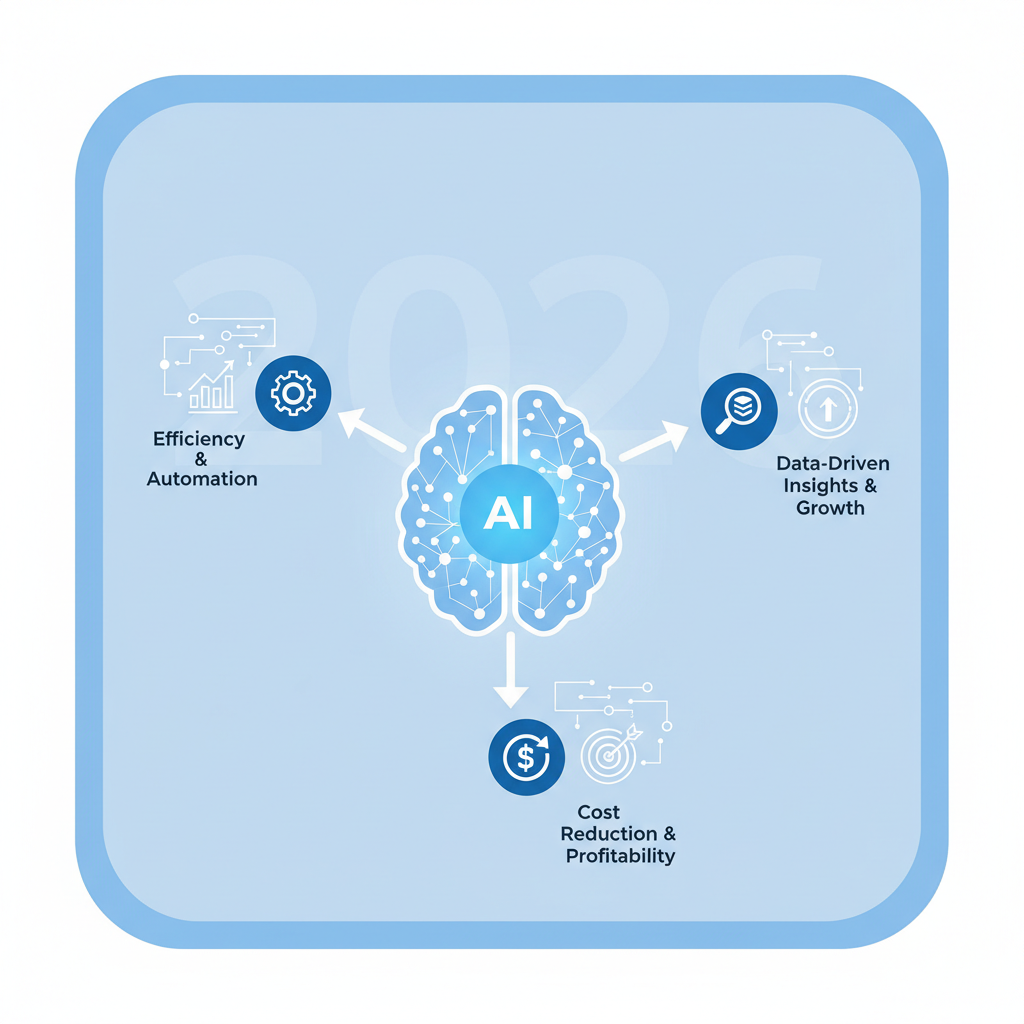
Why AI Business Optimization Works in 2026
The business landscape changed dramatically. Labor costs keep rising, customer expectations keep climbing, and market competition never sleeps. In this environment, businesses that optimize with AI win—those that don’t gradually lose ground.
Here’s what makes 2026 the perfect year to implement AI optimization: First, AI models are now genuinely production-ready. They’re not experimental anymore. Second, integration with existing business software is seamless—most platforms have native AI connectors. Third, the cost per automation dropped 60-70% compared to just two years ago.
Honestly, here’s my take: Companies that haven’t started optimizing with AI by now are leaving 25-40% efficiency gains on the table. That’s not just lost productivity—that’s lost profit margin, slower growth, and a weaker competitive position.
The biggest wins come from targeting the right areas. Not every process needs AI. The sweet spot is tasks that are repetitive, data-heavy, rule-based, and create bottlenecks. These are the operations where AI delivers 3-5x improvements with minimal setup.
You might also like
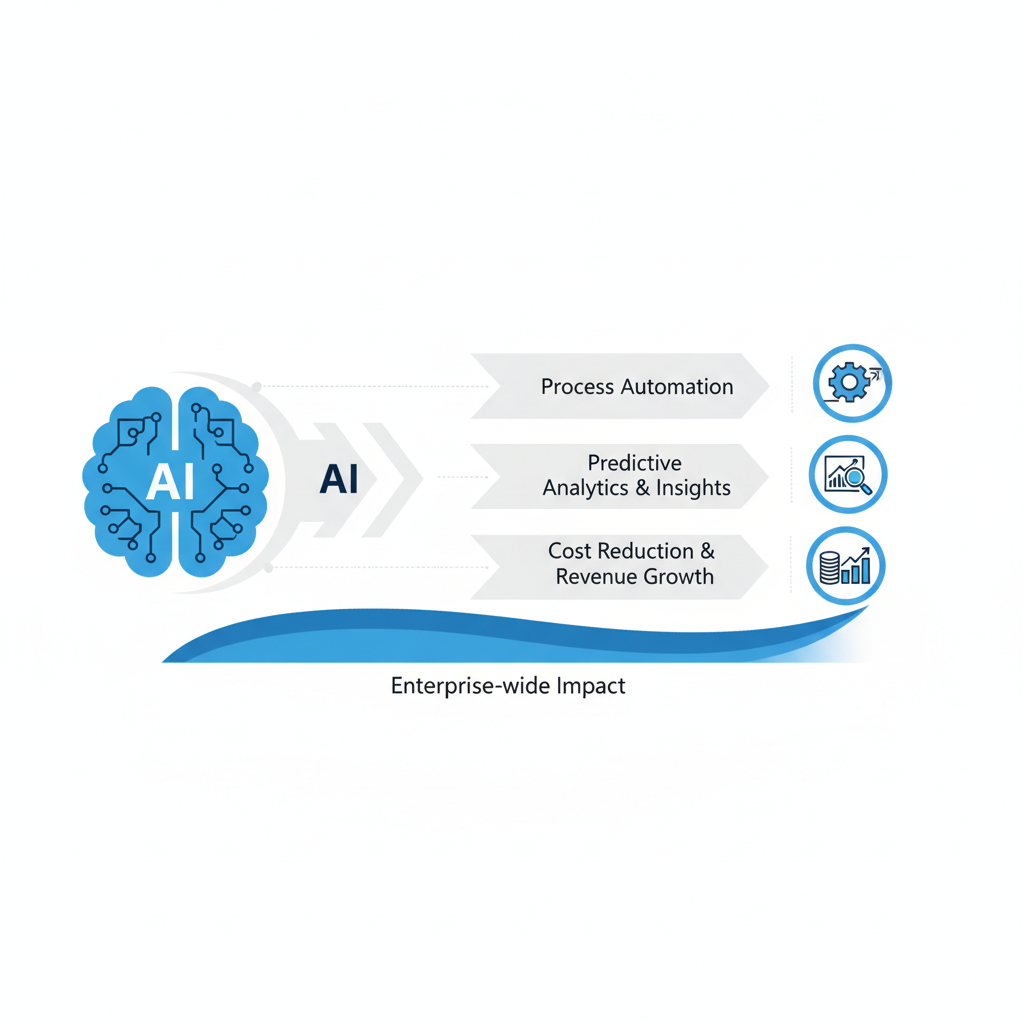
Core Optimization Strategies for Every Business
1. Process Automation & Workflow Optimization
This is where most companies start. Identify tasks that eat time but don’t require human judgment: data entry, invoice processing, email sorting, report generation, customer request routing. AI handles these in a fraction of the time, error-free.
Real impact: A customer service team processing 200 incoming tickets daily can automate 60-70% of initial triage and response. An accounting department spending 40 hours weekly on data entry can cut that to 5-8 hours using invoice automation. The human time saved goes to actual problem-solving and customer relationships.
2. Predictive Analytics & Smart Decision-Making
AI doesn’t just execute—it predicts. Machine learning models analyze historical data to forecast customer churn, identify sales opportunities, predict equipment failures, and estimate demand. This moves your business from reactive to proactive.
The advantage is timing. If you know which customers are at risk of leaving, you can intervene before they go. If you predict inventory needs two weeks in advance, you avoid stockouts and overstock. If you flag equipment that’s about to fail, you prevent costly downtime.
3. Customer Experience Personalization at Scale
AI allows you to treat each customer uniquely without hiring 100 more staff. Product recommendations, personalized email campaigns, dynamic pricing, custom support flows—these all happen automatically based on individual behavior and preferences.
Companies using AI-driven personalization see 20-35% increases in conversion rates and 15-25% higher customer lifetime value. That’s not a guess—that’s measured across thousands of implementations.
4. Content & Knowledge Management Automation
If you’re creating content, writing documentation, generating reports, or managing knowledge bases, AI accelerates everything. Write once, AI adapts it for different formats, audiences, and channels. Create an outline, AI builds the full piece. Capture customer questions, AI auto-generates FAQ entries.
This is particularly powerful for scaling content production without proportionally scaling your team. One writer with AI tools produces 3-5x more quality content than before.
5. Supply Chain & Operations Intelligence
AI optimizes the entire supply chain: demand forecasting, route optimization, warehouse management, supplier selection, and cost reduction. By analyzing thousands of variables simultaneously, AI finds inefficiencies that human planners would miss.
Companies using AI supply chain optimization report 10-20% cost reductions and 15-30% improvement in on-time delivery.
Tools & Implementation Framework
Here’s a quick look at the categories of tools you’ll need and how to approach implementation:
| Category | Purpose | Examples | Setup Time |
|---|---|---|---|
| Workflow Automation | Automate repetitive tasks & processes | Zapier, Make, N8N, IFTTT | 2-7 days |
| AI Writing & Content | Generate, edit, scale content | Claude, GPT-4, Jasper, Copy.ai | 1-3 days |
| Analytics & Insights | Predictive analytics & data analysis | Power BI, Tableau, Mixpanel | 2-4 weeks |
| Customer Intelligence | Personalization, segmentation | HubSpot, Segment, Klaviyo | 3-10 days |
| Document Processing | Extract, classify, process docs | ChatGPT Plugins, Nanonets, Levity | 3-14 days |
| Business Intelligence | Real-time dashboards & reporting | Looker, Qlik, Perplexity | 1-3 weeks |
Step-by-Step Implementation Approach
Week 1-2: Audit & Identify — Map all business processes. Talk to team leads. Identify top 5 pain points that consume time, cause errors, or slow growth. Score each by impact (revenue gained or saved) and feasibility (ease to automate). Start with high-impact, easy-to-implement wins.
Week 3-4: Quick Wins — Implement 1-2 no-code automation workflows using Zapier or Make. These usually fix email workflows, lead routing, or data syncing. Goal: Show team immediate ROI and build momentum.
Week 5-8: Customer-Facing Optimization — Deploy AI personalization, chatbots, or automated customer responses. This directly improves customer experience and shows measurable revenue impact.
Week 9-12: Strategic Automation — Build predictive models, set up advanced analytics, implement forecast-based planning. These require more setup but unlock strategic advantage.
You might also like
Real-World Optimization Examples
Example 1: E-Commerce Store Optimization
A $2M annual online retailer implemented AI across three areas. First, product recommendations using behavioral ML increased average order value by 22%. Second, dynamic pricing based on demand, competition, and inventory reduced overstock losses by 18%. Third, automated email sequences for cart abandonment and post-purchase recovered $340K annually.
Total implementation time: 6 weeks. Total cost: $8K in tools and integration. Year 1 benefit: $520K (increased revenue + recovered revenue + reduced waste). ROI: 6500%.
Example 2: SaaS Customer Support Optimization
A 50-person SaaS company had a support team spending 120 hours weekly on repetitive questions. They implemented an AI-powered support system that auto-drafted responses for 60% of tickets, classified tickets for instant routing, and updated the knowledge base automatically. Result: Support team time spent on complex issues increased from 40% to 70%, customer satisfaction scores went from 82% to 91%, and they avoided hiring two additional support staff.
Year 1 savings: $180K (two salaries + benefits). Tool cost: $18K. ROI: 900%.
Example 3: B2B Sales Pipeline Optimization
A sales team of six reps was losing deals due to slow follow-up and poor lead scoring. They deployed AI that scored incoming leads by purchase probability, automatically prioritized high-value prospects, suggested optimal contact times, and generated personalized outreach emails. Sales velocity improved by 35%, deal close rates increased 18%, and the team closed $650K additional pipeline.
Tool costs: $12K annually. Additional revenue: $650K. Profit from that revenue: $195K (at 30% margin). Year 1 net benefit: $183K.
Measuring Optimization ROI: What to Track
Not all AI optimization benefits are obvious immediately. Here’s what to measure to justify continued investment:
Direct Revenue Metrics — Increased sales from personalization, upsell/cross-sell revenue, recovered revenue from automation, customer lifetime value growth.
Cost Reduction Metrics — Hours saved per employee, reduction in manual errors, prevented turnover/hiring cost, operational expense reduction.
Efficiency Metrics — Process cycle time reduction, throughput increase, quality/accuracy improvement, time-to-market speed.
Customer Metrics — Customer satisfaction score movement, Net Promoter Score change, churn rate reduction, support ticket resolution time.
Strategic Metrics — Competitive feature parity, market share growth, employee satisfaction (less time on busywork), scaling capacity without proportional hiring.
Pro tip: Start tracking these metrics before you implement AI. Post-implementation, the difference becomes your ROI baseline. Most businesses find that once you can track metrics, you discover even more optimization opportunities.
You might also like
FAQ: Common Questions About AI Business Optimization
Q: How much does AI business optimization cost to implement?
A: It varies widely. Quick wins with no-code automation cost $50-500/month. Comprehensive optimization across multiple areas ranges from $5K-50K depending on company size and complexity. Most businesses see payback within 3-6 months through cost savings or revenue gains.
Q: Do we need data scientists or specialized AI expertise?
A: Not for most implementations. Modern no-code and low-code tools handle complexity. You need one person who understands your business processes and can learn the tools—that’s it. For advanced predictive models, you might hire a contractor, but start without them.
Q: How long until we see results?
A: Quick wins show results in weeks. Process automation typically delivers value within 30 days. Customer personalization shows impact within 4-8 weeks. Advanced analytics and predictive models take 8-16 weeks to demonstrate clear ROI, but the upside is much larger.
Q: What about data security and privacy concerns?
A: Valid concern. Use enterprise-grade tools with SOC 2 compliance, GDPR compliance, and data encryption. Never send sensitive customer data to public APIs unless necessary. For critical data, consider self-hosted or private AI models. Most modern SaaS tools have security requirements built in.
Q: Will AI replace our employees?
A: Not if done strategically. AI handles routine tasks, freeing employees for higher-value work. Employees become more productive, not redundant. Companies that optimize with AI typically see improved employee satisfaction because the work becomes less repetitive and more strategic. However, if a role is 100% routine tasks, that role may be affected—plan for retraining or transition.
Q: What’s the biggest mistake companies make?
A: Trying to optimize everything at once. Start with one high-impact area, nail it, measure results, then expand. Also, many companies buy expensive tools before understanding what they actually need. Start with cheaper, simpler tools. Upgrade only when you’ve outgrown them.
Q: How do I stay competitive if I don’t implement AI optimization?
A: You gradually can’t. Competitors who optimize gain speed, efficiency, and cost advantages. They can undercut pricing, move faster, and serve customers better. Over 2-3 years, this compounds into significant market share loss. Starting now isn’t optional for businesses planning to scale.
Final Verdict: Your AI Optimization Roadmap
AI business optimization is no longer a nice-to-have—it’s how successful companies operate in 2026. The technology is mature, affordable, and proven to deliver 2-5x ROI within the first year.
Your next move is simple: Pick one process that’s eating time, creating errors, or slowing growth. Run a small 30-day AI optimization pilot on just that process. Measure the results. If ROI is positive, expand to your next priority. This iterative approach reduces risk while building momentum and internal expertise.
Companies that start in Q2 2026 will be fully optimized by Q4, giving them 8+ months to compound efficiency gains and pull ahead of slower competitors. The time to act is now.</p