7 AI Business Basics for One-Person Startups in 2026
Running a one-person startup in 2026 means you need AI on your side. This guide breaks down the essential AI business basics you need to know—from task automation to customer management—without the complexity. Whether you’re launching a service business, digital product, or agency, these AI fundamentals will help you work smarter, not longer. We’ll cover the tools, strategies, and mindset shifts that let solo founders compete with teams ten times their size.
- Quick Overview
- AI Fundamentals for Solo Founders
- Building Your First Automation Workflows
- Essential AI Tools Stack for One Person
- Practical Setup & Real Examples
- Scaling Without Hiring
- FAQ
Quick Overview
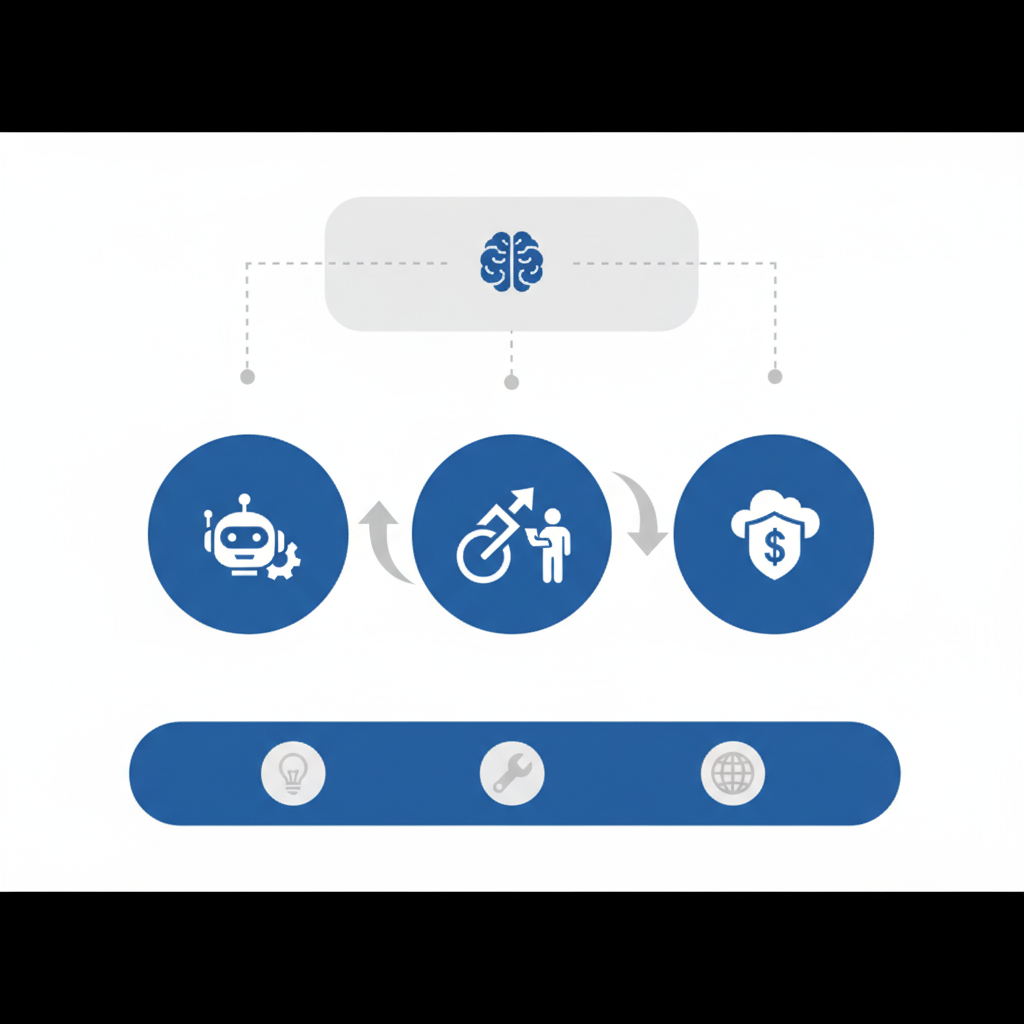
AI business basics for one-person startups aren’t about having the most tools—they’re about picking the right ones and automating the work that drains your energy. Let me break it down simply: you have a finite number of hours. AI fills those gaps by handling repetitive tasks, generating content ideas, managing customer relationships, and analyzing data. The goal isn’t to replace your thinking; it’s to eliminate the busywork so you can focus on what only you can do—strategy, client relationships, product innovation.
In 2026, AI tools are more affordable and accessible than ever. Many offer free tiers or freemium models. You don’t need enterprise budgets to compete. You need clarity on what to automate first, which tools integrate with your workflow, and how to measure whether the AI investment is saving you actual time.
This guide walks you through the foundations so you’re not overwhelmed by choice paralysis or wasting money on tools that don’t move the needle.
AI Fundamentals for Solo Founders
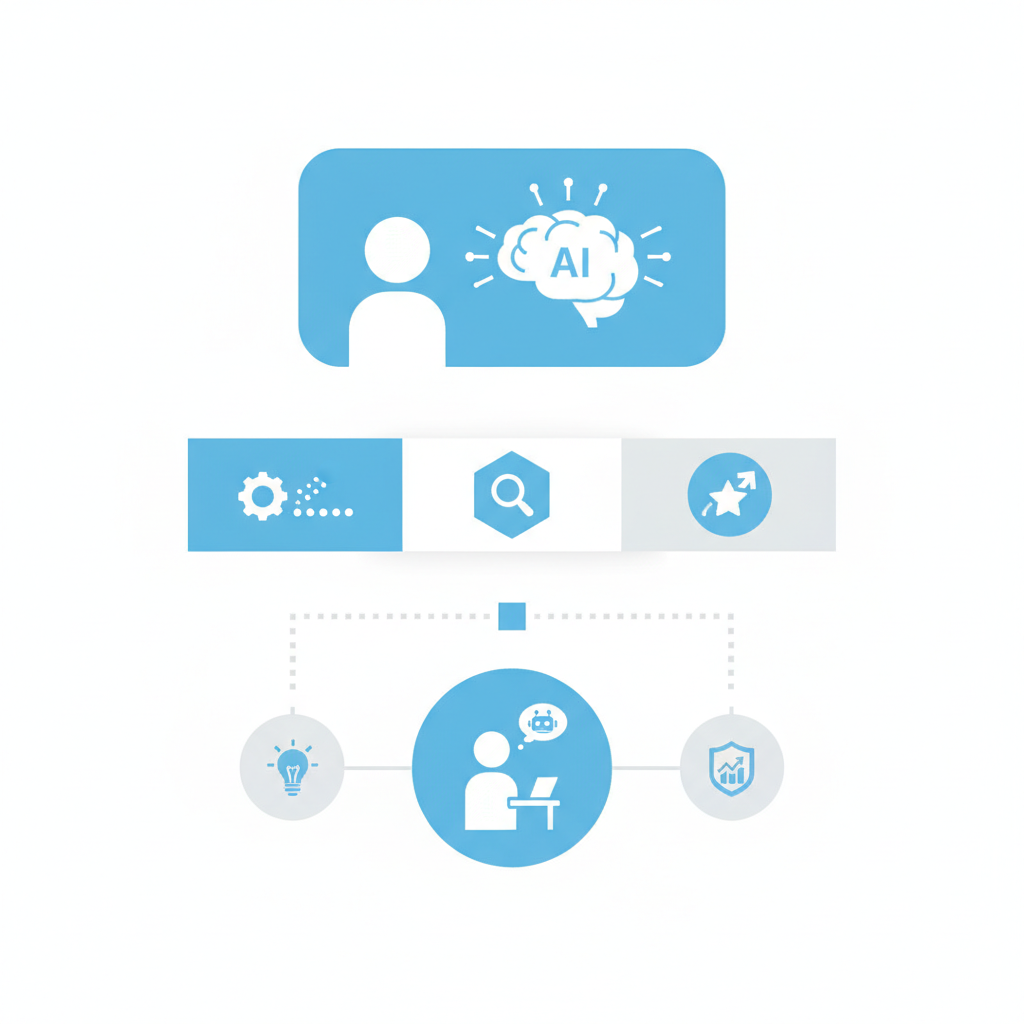
Before you buy any tool, understand the three core pillars of AI in one-person businesses:
1. Automation replaces repetition. Every task you do the same way twice is a candidate for automation. Email sequences, invoice generation, social media posting, data entry—these are gold for AI. The time you save multiplies fast. If you’re doing a task manually that takes 30 minutes twice a week, automating it gives you roughly 60 hours a year back.
2. AI augments your decisions. AI doesn’t replace judgment; it provides better information faster. Tools that analyze customer data, suggest pricing, or flag which leads are warmest give you a competitive edge. You still make the call, but with smarter input.
3. Content and communication scale with AI. Writing email copy, blog posts, social captions, product descriptions—AI generators handle the first draft in seconds. You refine, brand-ify, and ship. Your one-person business suddenly has a content machine.
You might also like
The honest truth: not every AI tool will pay for itself. Some will feel clunky, not integrate with your stack, or solve a problem you don’t actually have. Start with one tool solving one clear pain point. Measure the impact. Then add the next. This prevents tool sprawl and keeps your workflow sane.
Building Your First Automation Workflows
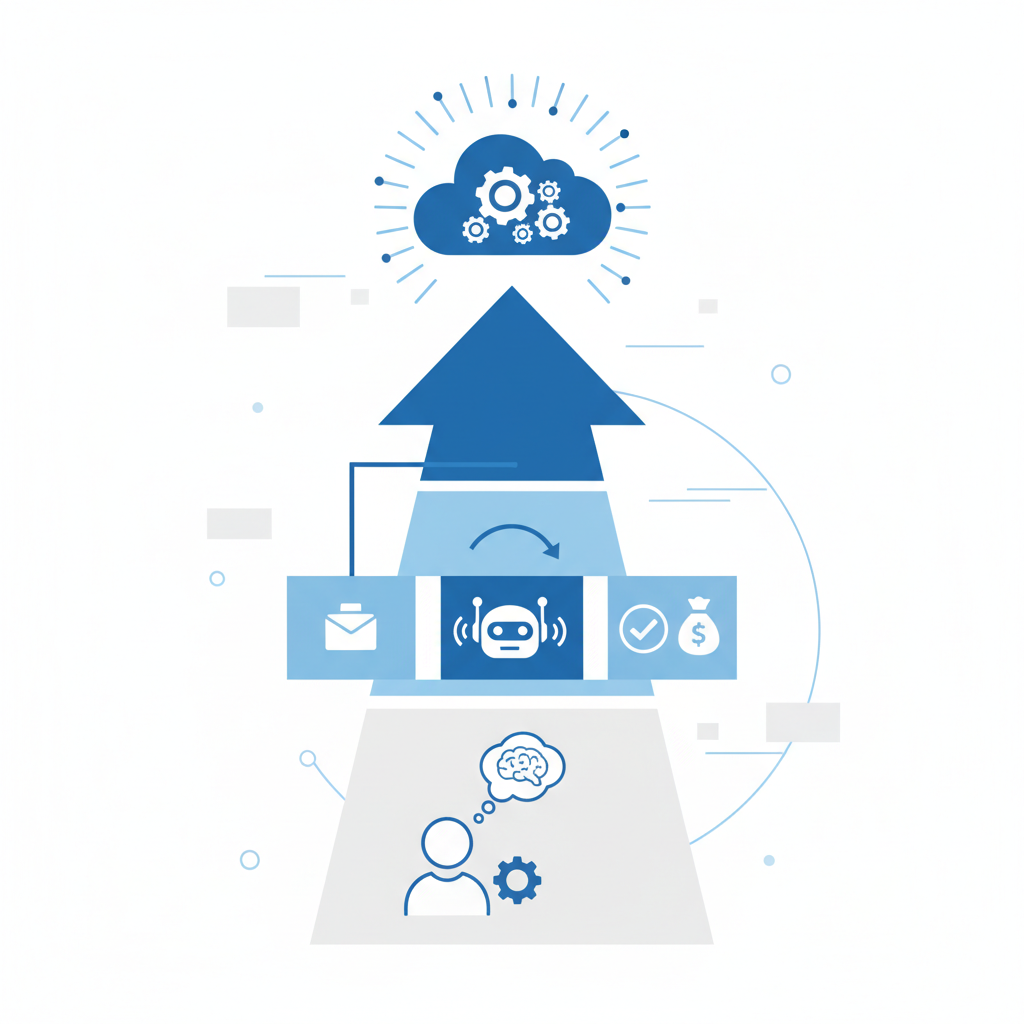
Automation workflows are the engine of a one-person business running on AI. A workflow chains actions together—when X happens, do Y and Z automatically. Here’s how to identify and build them:
Step 1: Map your manual processes. Spend one week writing down every repetitive task. New lead comes in—what do you do? Customer buys—what happens next? Social post goes live—do you manually share it everywhere? Newsletter day—how long does it take? These are your workflow candidates.
Step 2: Prioritize by time + emotion. Which tasks take the longest? Which drain you mentally? Those are your top targets. A task that takes 5 hours a month and frustrates you is worth automating before a 15-minute task you don’t mind doing.
Step 3: Choose your automation layer. Zapier and Make.com connect 1000+ apps and let non-coders build workflows. For email specifically, tools like Mailchimp and ConvertKit have built-in automation. For customer service, HubSpot’s free tier includes basic workflows. Pick based on where your biggest bottleneck lives—usually email, lead management, or data organization.
Step 4: Build one workflow, test it, refine. Don’t overengineer. A simple workflow like “New email signup → add to CRM → send welcome email → tag as interested” takes 10 minutes to set up and saves hours over time. Start there. Once you’re comfortable, stack more.
Common one-person business workflows that work in 2026:
Lead capture → auto-respond → qualify → nurture sequence → conversion tracking. Social content creation → schedule across platforms → track engagement → weekly summary report. Customer purchase → invoice generation → delivery → follow-up → review request → upsell trigger.
Essential AI Tools Stack for One Person
Here’s an honest assessment of the core tools that actually move the needle for solo founders. I’ve tested most myself. You don’t need all of them—pick the ones matching your business type:
| Tool Category | Top Pick | Best For | Free Tier? | Approximate Cost |
|---|---|---|---|---|
| AI Writing | ChatGPT Plus | Copy, emails, outlines, ideas | Yes (limited) | $20/month |
| Workflow Automation | Zapier or Make | Connect apps, run workflows | Yes (limited) | $19-99/month |
| Email Marketing | Mailchimp or ConvertKit | Email sequences, list management | Yes (up to 500) | $0-50/month |
| CRM | HubSpot Free or Pipedrive | Lead tracking, sales pipeline | Yes (free tier) | $0-45/month |
| Customer Support | Tidio or Intercom | Chatbot + helpdesk | Yes | $0-50/month |
| Content Calendar | Buffer or Later | Social scheduling + analytics | Yes (limited) | $5-35/month |
| AI Image Gen | Canva Pro or Midjourney | Graphics, mockups, visuals | Yes (limited) | $120-180/year or $20/month |
The “lean startup” stack: Mailchimp (free) + Zapier (free) + ChatGPT (paid) + HubSpot free tier = roughly $20/month. This covers email, automation, writing, and basic sales tracking. Add Canva if you need visuals. That’s genuinely enough to run a six-figure one-person business.
You might also like
Practical Setup & Real Examples
Theory is fine; let’s get practical. Here are three real one-person business scenarios and how to structure them:
Scenario 1: Freelance Service (Web Design, Consulting, Copywriting)
Your bottleneck: lead management + proposal writing + follow-ups that take forever. Setup: Use HubSpot free tier to track every prospect. When someone fills out your contact form, Zapier automatically adds them to your CRM and sends an AI-generated personalized email (ChatGPT template + Mailchimp). Set up a 5-email nurture sequence that runs automatically over 2 weeks. Your job: respond to hot leads and close. Everything else is on autopilot. Time saved: 8-10 hours a week.
Scenario 2: Digital Product Business (Courses, Templates, Ebooks)
Your bottleneck: content creation + marketing + customer communication. Setup: Use ChatGPT to generate blog post outlines and social captions weekly. Buffer schedules them across LinkedIn, Twitter, Instagram automatically. ConvertKit runs your email sequences—free plan handles up to 10,000 subscribers. When someone buys your product, Zapier triggers an automated delivery email and welcome sequence. You write the core course/product once; the system sells and delivers it. Time saved: 12-15 hours a week on content and admin.
Scenario 3: SaaS or Software Tool (as solo founder)
Your bottleneck: customer onboarding + support + feedback collection. Setup: Use Intercom’s free plan for a chatbot handling FAQ questions 24/7. Zapier collects feature requests from email and support channels into a Notion database you review weekly. Send automated onboarding emails guiding new users through your product. Collect NPS scores via email, automatically segment happy customers from struggling ones. Your job: talk to struggling users and build features based on patterns. Time saved: 6-8 hours a week on support.
In each scenario, the setup takes 1-2 days. The payoff compounds over months and years as the system handles volume without you doing more work.
Scaling Without Hiring
The dream of a one-person startup is to grow revenue without hiring—keeping margins high and staying lean. AI makes this possible longer than ever before. Here’s how:
Layer 1: Automate everything that’s not judgment. Data entry, scheduling, invoicing, report generation—hand these to AI. One person with smart automation can handle what used to need a team of three.
Layer 2: Use AI to replicate yourself in specific domains. AI writing tools replicate your copywriting voice. AI chatbots replicate your customer service. You train them once with your style and knowledge, then they handle volume. You stay focused on strategy and relationships.
Layer 3: Build systems that scale with you, not against you. Instead of “I took on 3 more clients, so I work 3x more hours,” it’s “I took on 3 more clients, so I spend 30% more time because automation handles the bulk.” This is the AI advantage.
Layer 4: Hire AI before you hire people. Your first hire should be a $20/month ChatGPT subscription, not a $5,000/month employee. Push AI hard. See where it breaks. Only then hire for those gaps.
The reality in 2026: a one-person business with solid AI automation and clear focus can sustainably hit $500K-$1M annual revenue. Beyond that, you either build a team or build a product that sells itself. But up to that threshold, one focused person + AI + automation is the leanest, most profitable model.
You might also like
FAQ
Q: Do I need to code to set up AI automation?
A: No. Tools like Zapier, Make, and native app automation (Mailchimp workflows, HubSpot automations) are built for non-technical people. If you can click buttons and fill forms, you can build workflows.
Q: How much will my AI stack cost monthly?
A: A lean stack is $20-50/month. A robust stack with multiple tools is $100-300/month. Premium everything is $500+. Most one-person businesses thrive at the $50-150 range where you have quality tools without wasteful redundancy.
Q: Will AI replace me or make my business obsolete?
A: Not your business. It might replace the work you’re doing manually, which is the point. The businesses that fail are those that don’t adopt AI. The ones that win are those who use AI to do more with one person. You’re not competing against AI; you’re competing against other one-person founders. If they’re not using AI and you are, you win.
Q: What’s the fastest ROI on an AI tool?
A: Automation tools (Zapier, Make) or email marketing tools (Mailchimp, ConvertKit). These typically save time in days and pay for themselves in weeks. Writing tools (ChatGPT) are second. Customer service tools (chatbots) are third. Visual tools (Canva, Midjourney) depend on how much design work you do.
Q: How do I avoid tool overload?
A: Start with one tool solving one clear problem. Use it for 30 days. Measure whether it actually saves time or just feels productive. Only then add the next. Most successful one-person founders use 4-6 core tools. Anything beyond that is usually waste.
Q: Can I use free tiers to start my business?
A: Yes, absolutely. Free tiers are genuinely useful for solopreneurs. The trade-off is usually lower limits (fewer emails sent, fewer contacts, fewer automations). As revenue grows, you upgrade. This keeps early costs near zero.
As an Amazon Associate, I earn from qualifying purchases.
🛒 Also checked out while writing this
Quality headphones and ergonomic equipment keep a solo founder comfortable during long work sessions where focus and stamina matter.
Final Takeaway
- AI business basics for one-person startups are simple: automate repetition, augment decisions, and scale content. These three pillars let you compete with bigger teams.
- Build one automation workflow first, test it, measure the impact, then add the next. This prevents tool sprawl and keeps you focused on what works.
- Your core stack should include a writing tool (ChatGPT), automation (Zapier or Make), email (Mailchimp or ConvertKit), and a CRM (HubSpot free or Pipedrive). Everything else is optional.
- A lean AI stack costs $20-150/month and can run a six-figure one-person business. Invest in tools that directly save you time or money, not just tools that feel clever.
- The one-person founder who adopts AI wins against the founder who doesn’t. Use 2026 to build systems, not just do work. Your future self will thank you.
The winning move for one-person startups in 2026 isn’t more work—it’s smarter work. Start with these AI business basics today, pick one tool this week, and measure the impact. That small step compounds fast. Ready to compete like a team while staying solo? Let your AI stack do the heavy lifting.